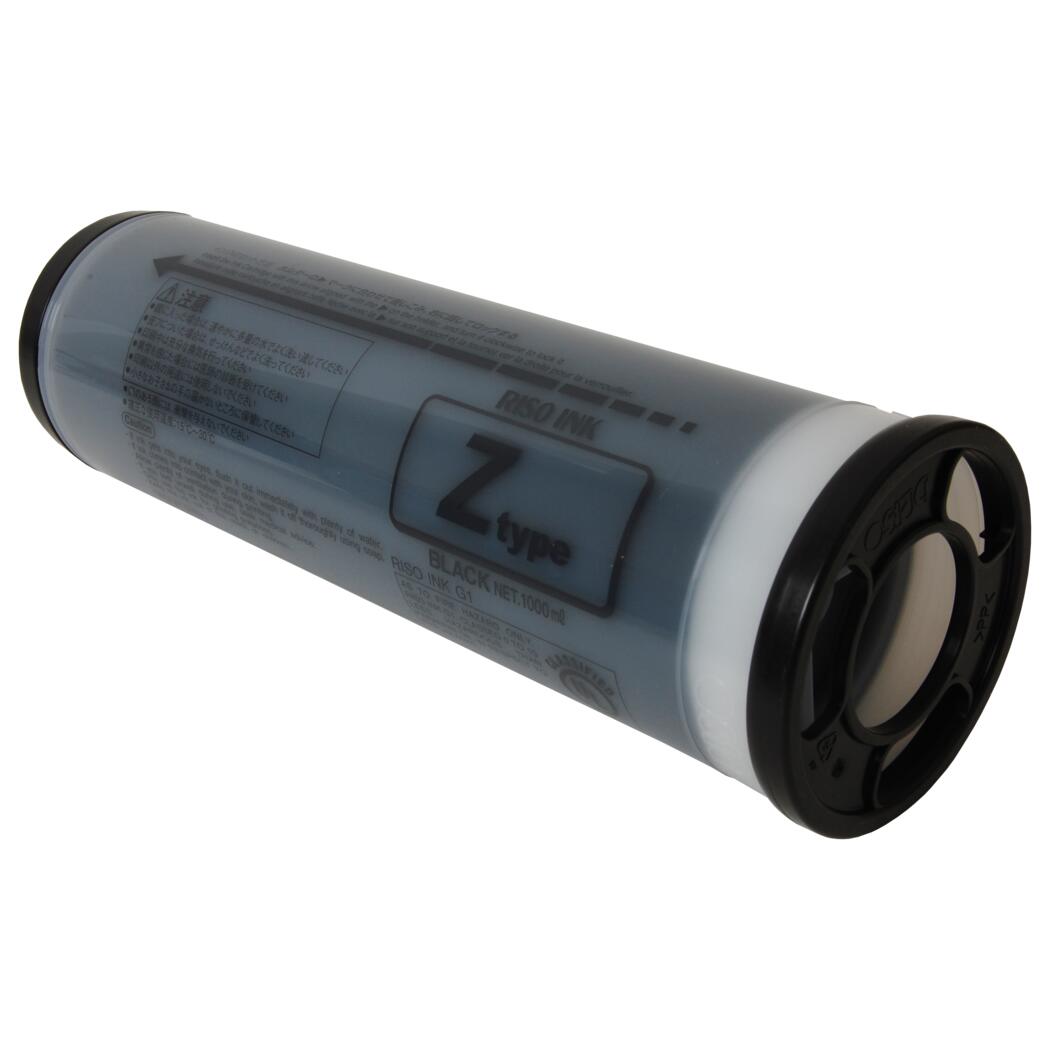
Chameleon-compatible Riso ink—the only reliable alternative to the original product.

  • image English
  • image Français
  • image Español
qr Code Url

Scan qrcode to view mobile website

Data is empty
0
Member Center
Exit
    Chameleon Riso Compatible Ink Supplier /News /Industry Information /RISO Inks — What's Inside, Part Numbers, Certified Compatible Options & B2B Pricing (2026) /

    RISO Inks — What's Inside, Part Numbers, Certified Compatible Options & B2B Pricing (2026)

    author: Ethan
    2026-06-25
    InkChameleon · B2B Ink Guide · 2026

    RISO Inks — What's Inside, Part Numbers, Certified Compatible Options & B2B Pricing (2026)

    Oil-based pigment ink for RISO ComColor printers — composition breakdown, series part numbers, OEM vs compatible cost, and what procurement teams need before a bulk order.
    15 min read Updated June 2026 B2B · Procurement 23 Years Manufacturing

    RISO ink is an oil-based pigment ink — soy or rice bran base, pigment particles ground to ≤180nm, viscosity held at 10–11cp. Unlike inkjet or laser, it dries on contact without heat. This guide covers ComColor part numbers by series, what certified compatible ink costs versus OEM, and what procurement teams need to verify before a bulk order.

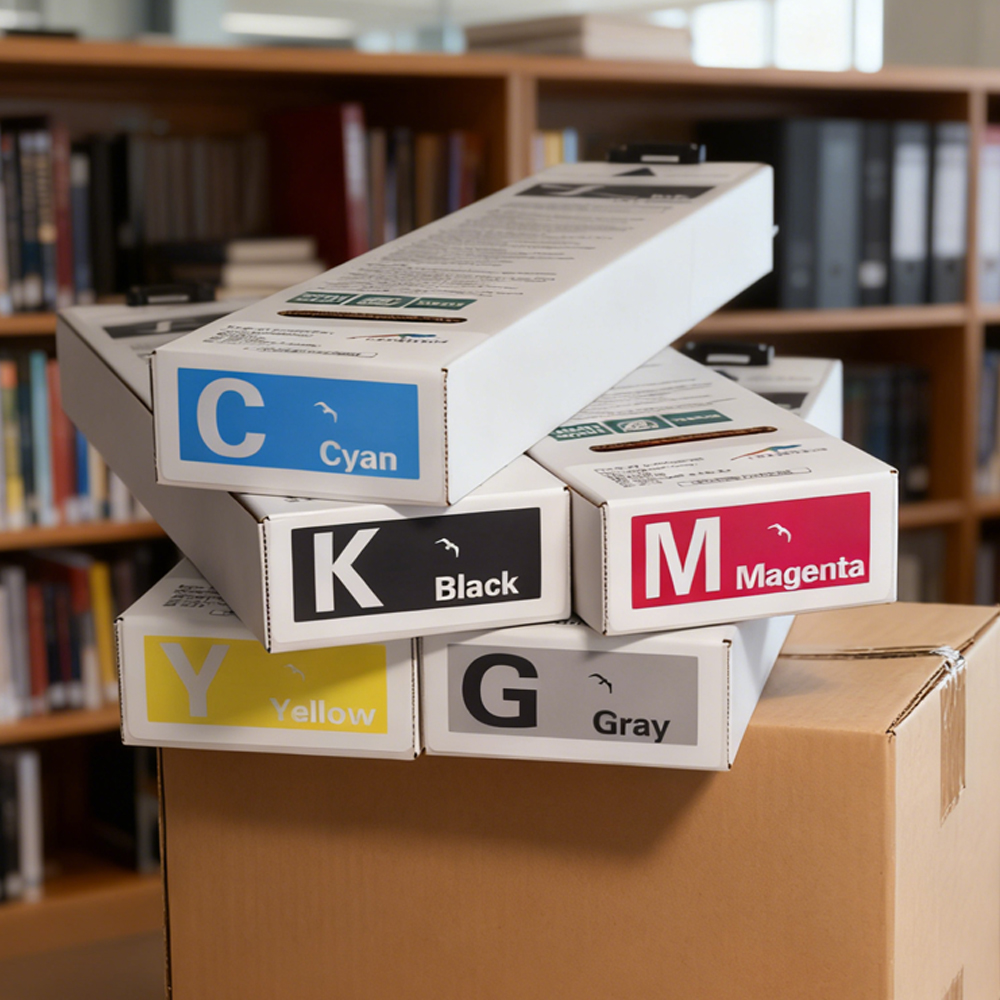
    RISO ComColor compatible ink cartridges — oil-based pigment B2B guide 2026
    Contents
    1. What Is RISO Ink — And Why It Prints Differently
    2. What's Inside — Composition & Manufacturing
    3. Two RISO Formats — ComColor vs Risograph
    4. Part Numbers by Series — Full Reference Table
    5. OEM vs Compatible — Real Cost Comparison
    6. 3 Things to Verify Before You Order
    7. How to Order Factory Direct
    8. Conclusion
    9. Questions Buyers Ask Before Their First Order
    Start Here

    What Is RISO Ink — And Why It Prints Differently from Regular Ink

    RISO ComColor compatible ink cartridges — sealed 1,000ml oil-based pigment
    RISO ComColor ink cartridges — sealed 1,000ml oil-based pigment, one per color channel

    If you've never worked with RISO before, the first thing that surprises most people is how the ink behaves. It doesn't fuse. It doesn't cure under UV. It absorbs into the paper on contact — cleanly, quickly, and at room temperature.

    That's because RISO ink is oil-based pigment, not water-based dye or plastic toner. The oil base carries the pigment onto the paper surface and absorbs into the fiber, leaving the pigment sitting on top. The result: a print that dries instantly, resists water, and holds up under heavy handling — exactly what high-volume commercial printing needs.

    One thing worth confirming upfront: RISO makes two completely different printing systems, and their inks are not interchangeable. If you're managing ComColor machines, you need sealed cartridges. If you're running Risograph duplicators, you need ink cylinders and drums. Everything from here covers ComColor.

    →
    Related Guide
    Riso Ink Explained — Colors, Types & How It Differs from Regular Ink · For Risograph and artistic printing users
    Inside the Cartridge

    What's Inside RISO Ink — Composition and How It's Made

    RISO ink composition diagram — oil-based pigment structure
    Image source: RISO · Oil-based pigment ink system — how ink reaches the paper without heat

    Most ink suppliers tell you what their ink does. We'd rather show you what's in it — because that's what determines whether it's safe for your machines, compliant for your markets, and consistent across every batch.

    Base — ~45%
    Soy / Rice Bran Oil
    Carrier fluid. Controls viscosity and dry time. Biodegradable, low VOC, almost no odor. Safe for enclosed classrooms and offices.
    Color Source — ~30%
    Pigment Particles ≤180nm
    Ground using German equipment. Particles above 200nm settle and block nozzles. Uniform size ensures stable suspension throughout shelf life.
    Distribution — ~15%
    Dispersant & Surfactant
    Keeps pigment evenly distributed in the oil base. Prevents settling during storage. Critical for consistent output batch after batch.
    Stability — ~10%
    Stabilizers & Anti-oxidants
    Prevent oil oxidation. Hold viscosity within 10–11cp from manufacture to expiry. Without these, viscosity drifts and color banding appears.

    How every batch is made and released:

    Raw material selection→ High-speed milling→ Particle size check→ Viscosity test→ Batch sampling→ Sealed filling→ MOAH/MOSH clearance

    We don't ship a batch until it clears every stage. That's the only way to guarantee the certificate number on the documentation matches what's actually inside the cartridge.

    System Check

    Two RISO Ink Formats — ComColor Cartridge vs Risograph Cylinder

    RISO ComColor cartridge vs Risograph ink cylinder — two different systems side by side
    ComColor sealed cartridge (left) vs Risograph ink cylinder loaded into drum (right) — not interchangeable

    Before ordering, confirm which system you're working with. It's a more common mistake in procurement than most people expect — especially for first-time RISO buyers managing mixed machine fleets.

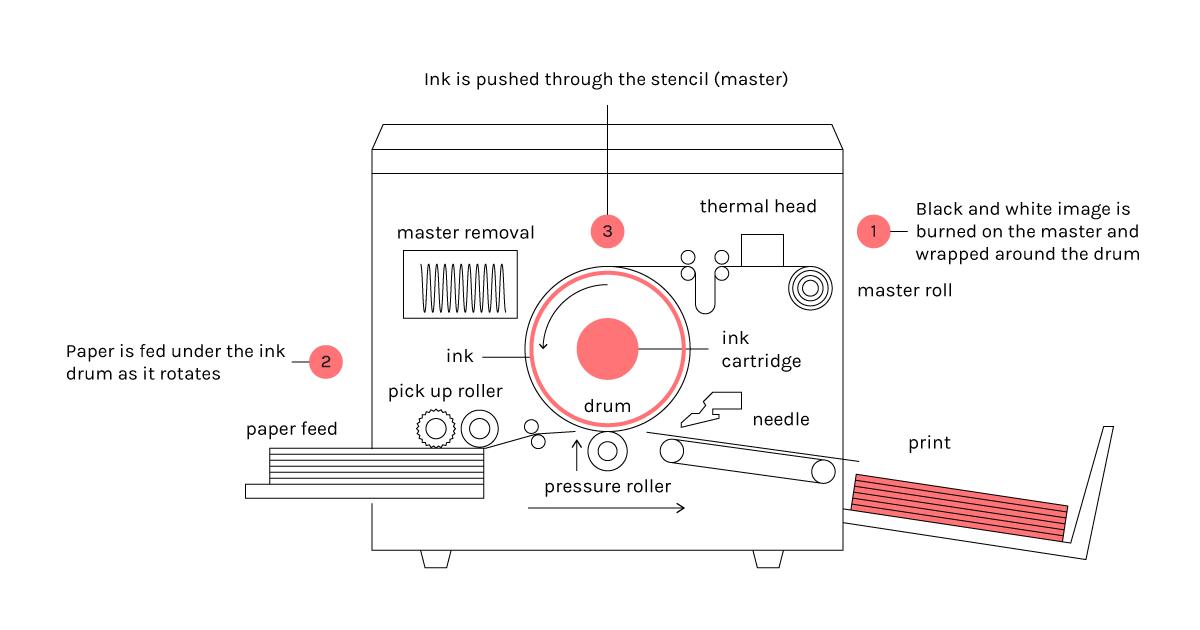
    ComColor machines use sealed 1,000ml cartridges — one per color channel, slotted directly into the machine. No drum, no master, no stencil process.

    Risograph duplicators use ink cylinders that load into color-specific drums. Changing color means swapping the entire drum unit.

    Quick check: GL · GD · FT · FW · X1 · CC in your model number → ComColor cartridges. EZ · RZ · MZ · SF · CV → Risograph cylinders.
    Reference Table

    RISO ComColor Ink Part Numbers — Full Series Reference
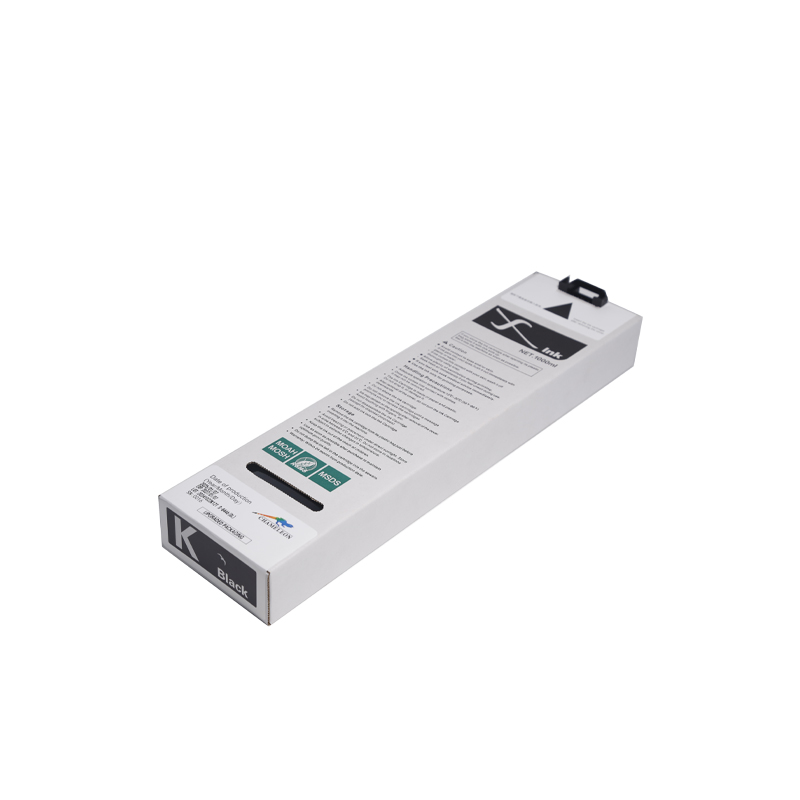
    RISO ComColor GL9730 compatible ink cartridges — five colors S-8446E to S-8450E
    GL series — five color cartridges including Gray (S-8446E to S-8450E)

    The model number on the front panel of your machine tells you everything. Cross-reference it below, confirm the part number, and you're done. Click any series name to view the product page.

    Series Models Colors Part Numbers From
    GL GL9730 / GL7430 CMYK + Gray S-8446E – S-8450E $70
    GD GD9630 / GD9631 / GD7330 CMYK + Gray S-7280 – S-7284 $60
    FT FT5230 / FT5430 / FT5231 / FT2430 / FT1430 CMYK S-8929 – S-8932 $70
    FW FW5230 / FW5231 / FW2230 / FW1230 CMYK S-7250 – S-7253 $60
    X1 X1 9150 / X1 7150 / X1 3150 / X1 7110 CMYK S-6701 – S-6704 $50
    CC CC 9050 / CC 7050 / CC 3050 / CC 7010 CMYK S-6300 – S-6303 $50

    GL9730 and GD9630 are often confused in procurement — they use different chip systems and different part numbers. Ordering GD ink for a GL machine will trigger a compatibility error. If you're unsure, send us your model number and we'll confirm before you order anything.

    The Numbers

    OEM vs Certified Compatible RISO Ink — What the Numbers Actually Look Like

    We're not going to tell you compatible ink is always the right choice. What we will do is show you the actual numbers so you can make that decision yourself.

    Price per Cartridge — OEM vs Chameleon Compatible (all series)
    GL Series Black
    OEM
    $180–$220
    Chameleon
    From $70
    GD Series Black
    OEM
    $160–$200
    Chameleon
    From $60
    FT / FW Series
    OEM
    $150–$190
    Chameleon
    From $60–70
    X1 / CC Series
    OEM
    $130–$170
    Chameleon
    From $50
    Save 60–70% per cartridge. Same page yield. Same oil-based pigment formula. MOAH/MOSH certified on both.
    OEM Original Chameleon Compatible
    GL Black price $180–$220 / unit From $70 / unit
    Page yield ~120,000 pages ≥120,000 pages
    Cost per 1,000 pages $1.50–$1.83 From $0.58
    MOAH/MOSH certified Yes Yes — CANEC23013163201
    Lead time 10–14 days 5 days
    MOQ Via distributor 1 piece

    For a print operation running four GL9730 machines at 50,000 pages per month each, switching to certified compatible ink saves approximately $37,000 per year on ink alone. That's not a rounding error — that's a real budget line.

    The risk is real but specific: it's concentrated in uncertified compatible ink with unknown particle size and unverified viscosity. A certified compatible ink from a verified manufacturer carries the same practical risk profile as OEM.

    Procurement Checklist

    Three Things to Verify Before You Order Compatible RISO Ink
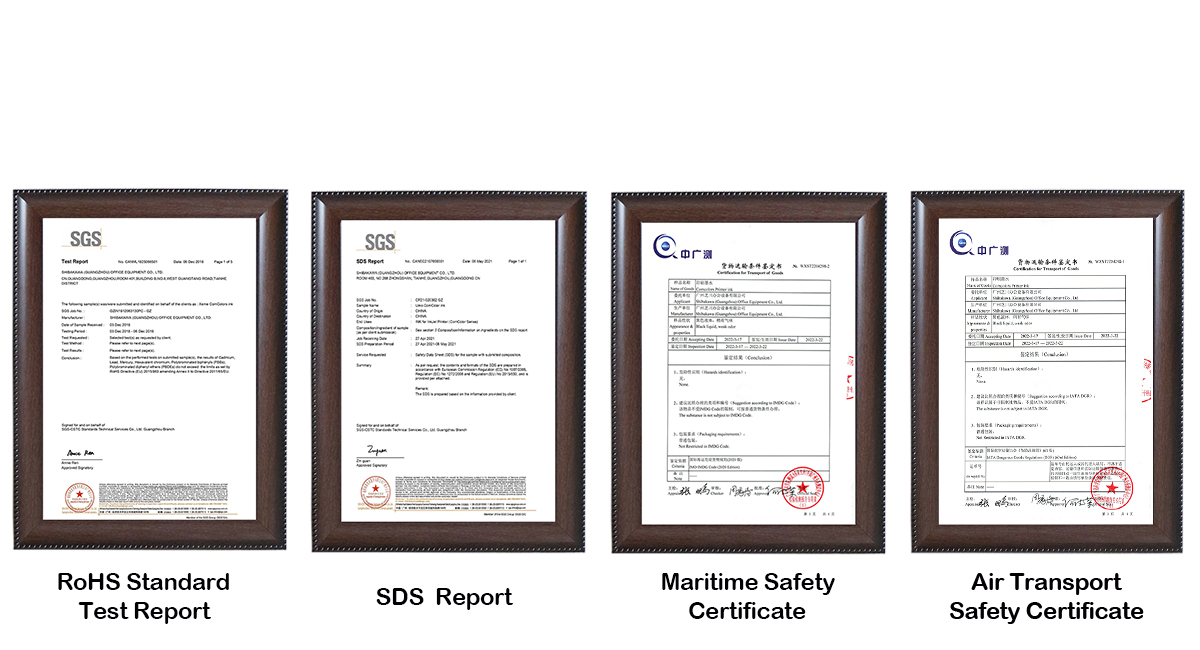
    MOAH MOSH certification for Chameleon RISO compatible ink — Certificate CANEC23013163201
    Original MOAH/MOSH Certificate — No. CANEC23013163201 · Third-party laboratory · Available on request

    We've been in this industry long enough to know where procurement goes wrong. It's almost never the price. It's almost always one of these three things.

    01 — Particle Size
    Ask for it in writing — must be ≤200nm
    Any supplier who can't tell you the particle size of their ink is telling you something about their quality control. Particles above 200nm settle inside the cartridge and block nozzles — the most common cause of print head damage from low-quality ink. Ours is ≤180nm. We have test reports to prove it.
    02 — Viscosity
    Must match ComColor operating range — 10–11cp
    Ink outside the 10–11cp range causes drop volume inconsistency — which shows up as banding and uneven color density across the page. Ask for the viscosity data sheet before you order, not after a problem appears on press.
    03 — MOAH/MOSH Certificate
    The original document — not a summary PDF
    If your ink enters European markets, MOAH and MOSH compliance is not optional since the EU April 2022 decree. Ask for the original certificate with the issuing laboratory name, certificate number, and issue date. A marketing summary is not a certificate. Ours is Certificate No. CANEC23013163201, third-party laboratory issued. We send the original on request.
    MOAH/MOSH Certified ISO/IEC 24712 Yield Tested EU RoHS 2.0 Particle size ≤180nm Viscosity 10–11cp
    How We Work

    How to Order Factory Direct — Sample First, Then Scale

    Chameleon factory Guangzhou — RISO ComColor compatible ink warehouse ready to ship
    Guangzhou factory — all ComColor series in stock, ships in 5 days

    We manufacture in Guangzhou and ship directly to distributors, print shops, and procurement teams across Europe, Asia, the Middle East, and beyond. No middleman. No distributor markup.

    Here is how most of our B2B relationships start:

    1
    Tell us your machine model
    We confirm the correct part number and send you a quote within 24 hours. No commitment needed at this stage.
    2
    Order a sample — MOQ is 1 piece
    Ships in 5 days. You install it, run a test, and see what the ink does on your actual machines — not in a showroom, in your real print environment.
    3
    Scale when you're ready
    Volume pricing from 300 units. Custom labeling available. We work out lead times, packaging, and any distribution requirements at that point.

    We don't push for bulk commitments before you've tested the product. If the ink doesn't perform the way we say it does, we'd rather know that on a single cartridge than after you've ordered a pallet.

    →
    Also Worth Reading
    Riso Ink Explained — Colors, Types & How It Differs from Regular Ink · Complete guide for Risograph users

    Conclusion — What This Means for Your Print Operation

    RISO ComColor ink is oil-based pigment — and that's not just a technical detail. The oil base is why it dries without heat. The particle size is why it either runs cleanly for 120,000 pages or blocks your nozzles in the first month. The certification is why it clears EU customs or gets held there.

    Certified compatible ink from a verified manufacturer carries the same practical risk profile as OEM — at 60 to 70 percent lower cost. The risk in this category is concentrated in uncertified products with unknown specifications, not in compatible ink as a whole.

    The decision framework is simple: ask for particle size documentation, viscosity data, and the original MOAH/MOSH certificate. Order a single-unit sample before committing to bulk. A supplier who provides all three without hesitation is a supplier worth talking to.

    Compatible ink makes sense whenSupplier provides particle size ≤200nm, viscosity 10–11cp, and original MOAH/MOSH certificate with lab name and certificate number
    Walk away whenNo documentation, no sample policy, no clear answer on particle size — the price saving isn't worth the print head risk
    Best savings by seriesGL and GD machines save the most — $110 to $150 per cartridge versus OEM, same page yield, same five-color output
    First stepSend us your machine model. We confirm the part number and send a sample quote within 24 hours — no commitment required
    Common Questions

    Questions Buyers Ask Before Their First Order

    My machine shows a chip error after installing compatible ink. What's happening?
    This usually means the cartridge wasn't pushed fully into the slot. Remove it, re-insert firmly until it clicks, and restart the machine. If the error persists, contact us with your model number — we'll walk through it with you. ComColor machines don't use the same chip-blocking firmware as HP or Epson, so errors on installation are almost always a seating issue, not a compatibility issue.
    Can I use this ink if I sell into EU markets?
    Yes. Chameleon ink passed MOAH/MOSH testing in 2023 under the EU April 2022 decree. Certificate No. CANEC23013163201 is available as an original document on request. We send the full laboratory certificate, not a marketing summary.
    Will compatible ink void my RISO warranty?
    In most markets, no. Consumer protection law in the US (Magnuson-Moss Warranty Act), EU, and UK prohibits warranty voids solely because of third-party ink use. A warranty can only be voided if the ink is shown to have directly caused the specific damage being claimed. Certified compatible ink used within specification does not create this risk under normal operating conditions.
    How long do cartridges last in storage?
    24 months sealed, stored at 15–25°C above 35% relative humidity. Keep away from direct sunlight and freezing temperatures. If a cartridge has been stored near the lower temperature limit, bring it to room temperature for two hours before installing — cold ink is more viscous than specified and may cause inconsistent output on the first few pages.
    What is the page yield per 1,000ml cartridge?
    GL and GD series black: approximately 120,000 pages. FT and FW series: approximately 100,000 pages. X1 and CC series: approximately 80,000 pages. All tested to ISO/IEC 24712 at 23°C, 60% humidity, A4 plain paper. Actual yield varies by image density and print settings.
    Can I get custom labeling for my distribution business?
    Yes. OEM custom labeling is available from 300 units. Contact us to discuss packaging requirements and we'll put together a proposal — most distributors have their own branding in place within two orders.

    Related Articles

    Setup Guide
    RISO ComColor Printer (2026): Setup, Ink Cartridge, and Maintenance Guide
    How-To
    Guide to Easy Ink Cartridge Replacement — Step-by-Step Breakdown
    Contents
    • 01What Is RISO Ink?
    • 02Composition & Manufacturing
    • 03ComColor vs Risograph
    • 04Part Numbers by Series
    • 05OEM vs Compatible Cost
    • 063 Things to Verify
    • 07How to Order
    • 08Conclusion
    • 09FAQ
    RISO ComColor Ink
    GL Series · From $70GL9730 / GL7430 — S-8446E to S-8450E GD Series · From $60GD9630 / GD9631 / GD7330 — S-7280 to S-7284 FT Series · From $70FT5230 / FT5430 / FT5231 — S-8929 to S-8932 FW Series · From $60FW5230 / FW2230 / FW1230 — S-7250 to S-7253 X1 Series · From $50X1 9150 / 7150 / 3150 — S-6701 to S-6704 CC Series · From $50CC 9050 / 7050 / 3050 — S-6300 to S-6303
    Need certified RISO ComColor ink? MOQ 1 piece. Sample before bulk. Ships in 5 days.
    Request a Sample →
    Share:

    RISO ComColor Compatible Ink — Supplier for UAE, Dubai & Middle East | Chameleon

    Compatible ink for RISO FT5230/FT5430

    Related Article
    image
    Learn about custom ink production, industrial-grade ink solutions, and how to select the most suitable screen printing consumables to ensure optimal printing results.
    Screen Printing Ink Factory: Custom Ink & Industrial Solutions
    2026-09-11
    image
    Explore the ultimate guide to Risograph ink price comparison, highlighting genuine riso ink benefits and the pitfalls of cheap alternatives.
    Risograph Ink Price Comparison: Find the Best Deals
    2026-09-08
    image
    2026 China Riso Ink Price list from a factory-direct supplier — genuine vs compatible ink costs, MOQ, bulk pricing tiers, and how to read any quote.
    China Riso Ink Prices
    2026-09-04
    image
    Discover the advantages of Riso ink cartridges for vibrant, cost-effective printing. Ensure quality, compatibility, and efficient workflow with Riso printer ink cartridges.
    Top Benefits of Riso Ink Cartridges for Quality Printing
    2026-08-24

    WhatsApp:+86 18813969691

    Email:master@comcolorink.com

    Room 1206, Building A2, No. 23 Middle Guangpu Road, Huangpu District, Guangzhou City, Guangdong Province, P.R. China

    Products

    Ink Suitable for Riso ComColor Printer

    Master Suitable for Risograph Printer

    Parts Suitable for Riso ComColor Printer

    About Us

    Contact us

    Download

    News

    Subscribe
    SiteMap

    Copyright © 2026 Chameleon. All rights reserved

    (296096)